Currently Empty: $0.00
August 17, 2026
0
admin
India’s Real Problem Isn’t Talent – It’s Career Guidance
Every year, millions of Indian students finish school without a clear answer to one simple question: what should I do next?
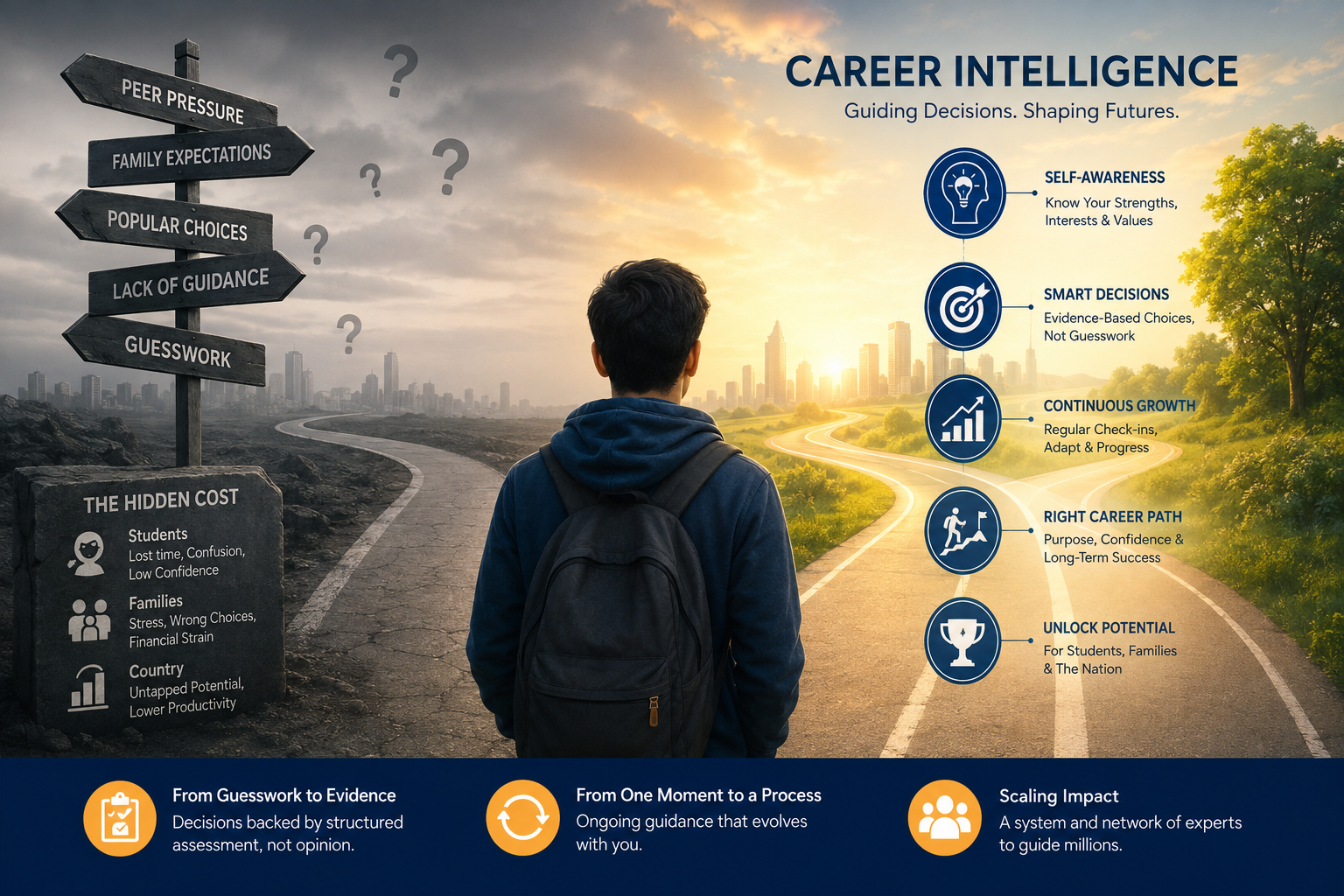
They’re not short on ability. India produces some of the world’s most capable, hardworking young people who top exams, win Olympiads, and build impressive portfolios. What’s missing isn’t talent. It’s guidance. Most students choose a stream, a degree, or a career path based on peer pressure, family expectation, or guesswork, not on any real understanding of their strengths, interests, or the opportunities actually available to them.
The Hidden Cost of Career Confusion
A wrong career decision doesn’t just waste a few years. It quietly shapes a person’s confidence, income, and sense of purpose for a lifetime.
What It Costs Students
Students who choose a path that doesn’t fit often discover the mismatch years later mid-degree, or worse, mid-career. By then, switching direction feels expensive, both financially and emotionally. Many simply stay on a path they never chose for themselves.
What It Costs Families
Parents want to help, but most are guessing too. Without structured guidance, families often default to “safe” choices, a popular stream, a well-known college rather than choices grounded in the child’s actual strengths.
What It Costs the Country
Multiply this gap by the number of students making decisions without support, and you’re looking at one of the largest, least-addressed problems in India today: a generation of talent operating below its real potential, not from lack of effort, but from lack of direction.
Why Traditional Career Counselling Falls Short
Career counselling, as it’s traditionally practiced, hasn’t kept pace with how complex career decisions have become.
The One-Time Test Problem
A single aptitude test, a one-time report, a 45-minute session were never designed to guide someone through a decade of decisions. They capture a snapshot, not a trajectory.
The Missing Follow-Through
Even when a report is accurate, most counseling stops there. No one checks back in six months to see if the plan is working, or helps adjust it as circumstances change.
A Different Approach: Career Intelligence
This is the gap MindTech was built to close not with more advice, but with Career Intelligence: a structured, ongoing approach to helping people understand themselves and make confident decisions at every stage of life, from school through to leadership.
What Changes When Guidance Becomes a System
From Guesswork to Evidence
When decisions are backed by structured assessment rather than opinion, the conversation between a student and their family shifts. It’s no longer “what do you feel like doing” versus “what will be safe” it becomes a shared, evidence-based plan both sides can trust.
From a Single Moment to a Continuous Process
A system that checks in every few months, adjusts as interests and circumstances change, and tracks measurable progress catches problems early long before a student is three years into a degree that doesn’t fit.
Why This Needs to Scale Now
India adds tens of millions of students to its education system every year, and the number of career paths available to them is expanding faster than most families can track on their own new technology roles, new industries, new hybrid careers that didn’t exist a decade ago. Closing this gap at scale requires more than a handful of counsellors; it requires a structured, repeatable system and a growing network of trained experts to deliver it.
In the next post, we’ll break down exactly what Career Intelligence means, and how it’s different from the career counselling you’ve heard of before.
Leave a Comment Cancel reply
Related Posts
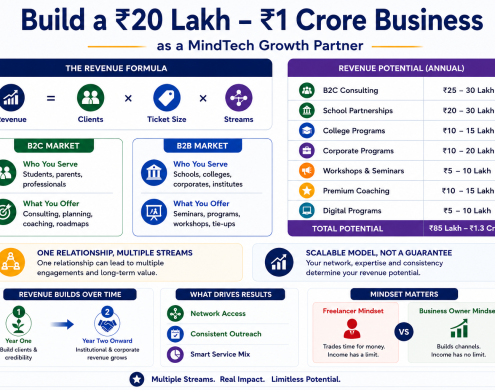
Building a ₹20 Lakh – ₹1 Crore Business as a MindTech Growth Partner
August 17, 2026
0
admin
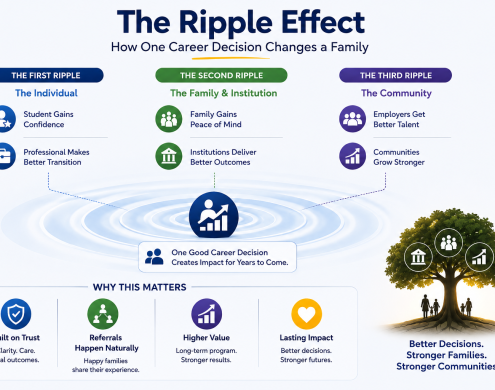
The Ripple Effect: How One Career Decision Changes a Family
August 17, 2026
0
admin