Currently Empty: $0.00
August 17, 2026
0
admin
What Is Career Intelligence?
“Career guidance” and “Career Intelligence” sound similar, but they’re not the same thing — and the difference matters more than it might seem.
Career Guidance vs. Career Intelligence
The Traditional Model
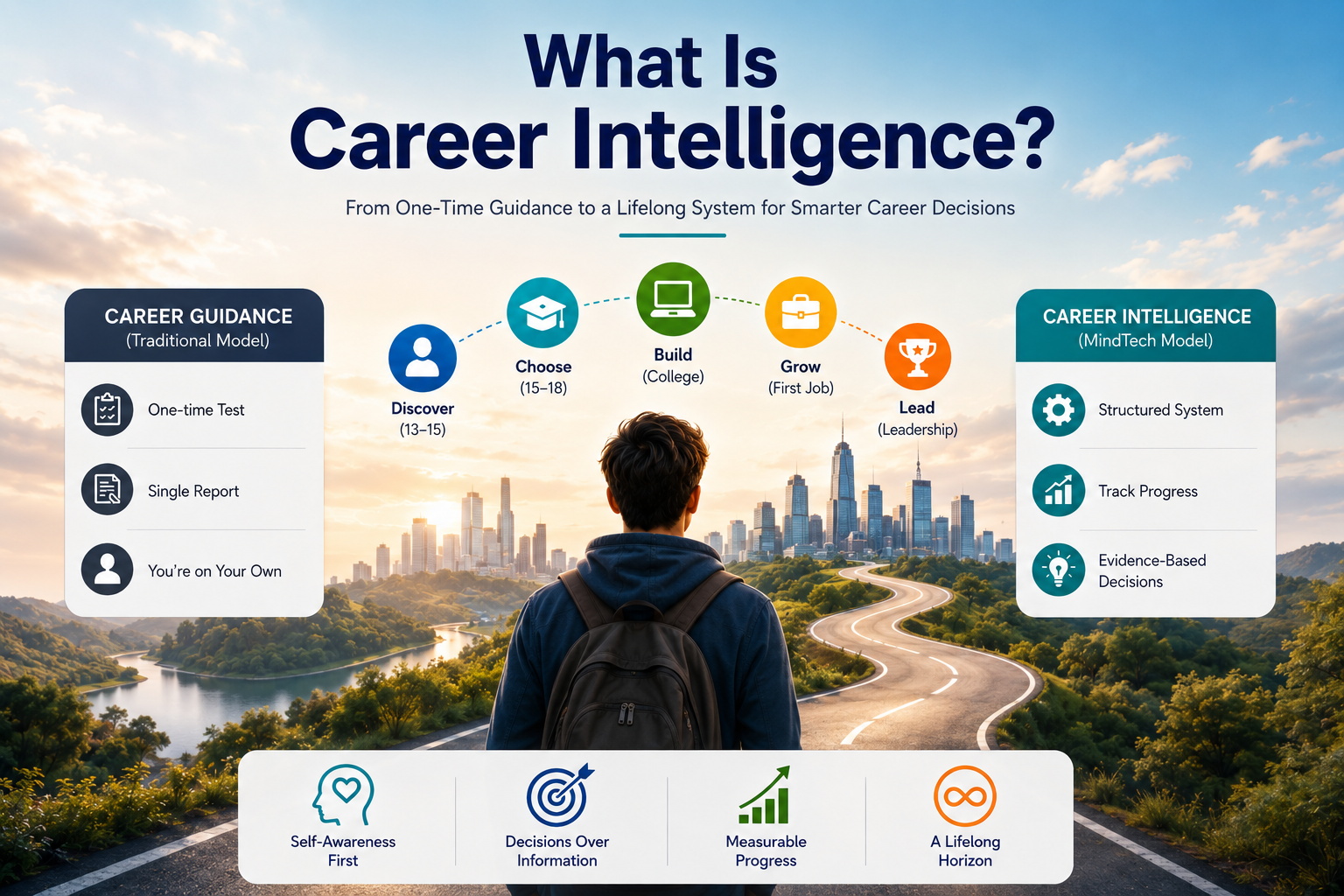
Career guidance is usually a single event: a test, a conversation, a report. It tells you something about yourself once, at one point in time, and then leaves you to figure out the rest on your own. It’s informative, but it isn’t designed to evolve with you.
The MindTech Model
Career Intelligence is a system. It’s the ongoing ability to understand your strengths, track your progress, adapt your plans as circumstances change, and make informed decisions — not just once, but continuously, from school through to leadership.
The Core Principles Behind Career Intelligence
Self-Awareness First
You can’t plan a career around strengths you haven’t identified. Every MindTech engagement starts with genuine self-discovery personality, learning style, interests, and values — before any career recommendation is made.
Decisions Over Information
A 40-page report means nothing if it doesn’t translate into “what do I do next.” Career Intelligence is built around actionable next steps, not just data.
A Lifelong Horizon
Career decisions don’t stop at age 18. They continue through college, first jobs, career transitions, and leadership. A system that only serves teenagers is only solving part of the problem.
Measurable Progress
Growth should be trackable skills, milestones, and readiness scores, not vague reassurance that “things will work out.”
Why This Shift Matters
This is why MindTech doesn’t sell a one-time assessment. It builds a structured journey from career discovery, to blueprint, to execution, to long-term growth so that the guidance a person receives at 13 is still relevant and evolving when they’re 30.
Career Intelligence turns career guidance from a single transaction into a long-term relationship. And that shift is exactly what’s created a new category of opportunity in India: the Career Intelligence Expert, a professional trained not just to advise, but to guide people through years of decisions with structure and evidence behind every recommendation.
Who Career Intelligence Is For
Students at Every Stage
From a 13-year-old choosing extracurriculars to an 18-year-old choosing a degree, Career Intelligence adapts its focus without losing continuity; each stage builds on the data and plan from the one before it.
Working Professionals
Career Intelligence isn’t only for students. Professionals facing a transition, a plateau, or a career change benefit from the same structured self-awareness and planning, applied to a different life stage.
Parents and Institutions
Parents get a dashboard instead of a guess, and institutions get a framework they can rely on for their students. Both are stakeholders in the same system, not separate audiences.
Why the Category Itself Is New
Most of what’s marketed as “career guidance” in India is still built around the one-time model — a test, a report, done. Career Intelligence is a genuinely different category, closer to how financial planning evolved from a single meeting into an ongoing advisory relationship. That shift created an entire profession of financial planners. The same shift, applied to careers, is creating the profession of the Career Intelligence Expert.
What Makes a Framework Trustworthy
A category can only earn trust if it’s backed by something more rigorous than opinion. That’s why Career Intelligence is built around structured assessments, certified frameworks, and measurable outcomes, the same three ingredients that give any advisory profession, from finance to medicine, its credibility. Without that structure, “guidance” is just an educated guess dressed up as expertise.
Leave a Comment Cancel reply
Related Posts
Building a ₹20 Lakh – ₹1 Crore Business as a MindTech Growth Partner
August 17, 2026
0
admin
The Ripple Effect: How One Career Decision Changes a Family
August 17, 2026
0
admin